The image of an architect has long been romanticized: a visionary individual, hunched over a drafting table, sketching majestic buildings with nothing but a pencil and a boundless imagination. While creativity remains the profession’s cornerstone, the modern architectural landscape is a vastly different ecosystem. Today’s architects are not just artists; they are technologists, environmental scientists, project managers, and empathetic community leaders rolled into one. The skills required to thrive have expanded dramatically, moving far beyond traditional design and drafting.
This evolution is driven by powerful global forces: the urgent climate crisis, rapid technological disruption, complex urban challenges, and a clientele that demands more value, efficiency, and well-being from their built environments. To remain relevant and in demand, architects must cultivate a diverse and modern skill set. This article deconstructs the seven most critical skills that define the successful architect of today and tomorrow.
The New Foundation: Why Architect Skills Have Evolved
The 21st century has fundamentally reshaped the architecture, engineering, and construction (AEC) industry. Several megatrends are responsible for this shift:
-
Sustainability Imperative: With the building sector accounting for nearly 40% of global carbon emissions, there is immense pressure to design net-zero, carbon-neutral, and regenerative structures.
-
Digital Transformation: Technologies like BIM, virtual reality, and AI are moving from novel tools to industry standards, revolutionizing how buildings are designed, constructed, and managed.
-
Economic and Social Pressures: Clients demand cost certainty, faster project delivery, and buildings that enhance human health and productivity.
-
Globalization: Architects often collaborate with international teams and must design for diverse cultural and climatic contexts.
These forces have rendered a purely design-centric skillset insufficient. The modern architect must be a hybrid professional.
A. Mastering Building Information Modeling (BIM)
Gone are the days when Computer-Aided Design (CAD) was the pinnacle of architectural technology. Today, Building Information Modeling (BIM) is the undisputed cornerstone of modern practice. Unlike CAD, which simply produces digital lines and shapes, BIM creates intelligent, data-rich 3D models of buildings.
Why it’s in High Demand:
BIM is not just a software skill; it’s a process that facilitates unparalleled collaboration between architects, engineers, contractors, and owners. It allows for:
-
Clash Detection: Identifying conflicts between structural, mechanical, and electrical systems before construction begins, saving millions in costly on-site rework.
-
Data Integration: Embedding crucial information like material specifications, energy performance data, and supplier details into every element of the model.
-
Project Lifecycle Management: The BIM model becomes a living document used not just for design and construction, but also for facility management, renovations, and even eventual decommissioning.
How to Develop This Skill: Proficiency in industry-standard software like Autodesk Revit, ArchiCAD, and Vectorworks is now a baseline requirement. Advanced demand exists for specialists who can manage BIM workflows, develop custom parameters, and leverage the model for advanced simulations.
B. Proficiency in Sustainable Design and ESG Principles
Sustainability has moved from a niche specialty to a non-negotiable core competency. Clients, regulators, and the market increasingly demand environmentally responsible design. This expertise is often formalized through credentials like LEED (Leadership in Energy and Environmental Design), WELL, or BREEAM.
Why it’s in High Demand:
-
Regulatory Compliance: Stringent building codes worldwide are mandating higher energy efficiency and lower carbon footprints.
-
Market Differentiation: Sustainable buildings command higher rental premiums, have lower operating costs, and attract environmentally conscious tenants and investors.
-
Ethical Responsibility: A growing number of architects view designing with the planet in mind as a fundamental ethical duty.
Key Areas of Expertise:
-
Passive Design Strategies: Optimizing building orientation, shading, natural ventilation, and daylighting to minimize mechanical energy use.
-
Life Cycle Assessment (LCA): Evaluating the environmental impact of building materials from extraction to disposal.
-
Embodied Carbon Calculation: Understanding and reducing the carbon emissions associated with construction materials and processes.
-
Integration of Renewable Energy: Seamlessly incorporating technologies like solar panels, geothermal systems, and heat recovery into designs.
C. Computational Design and Parametric Modeling
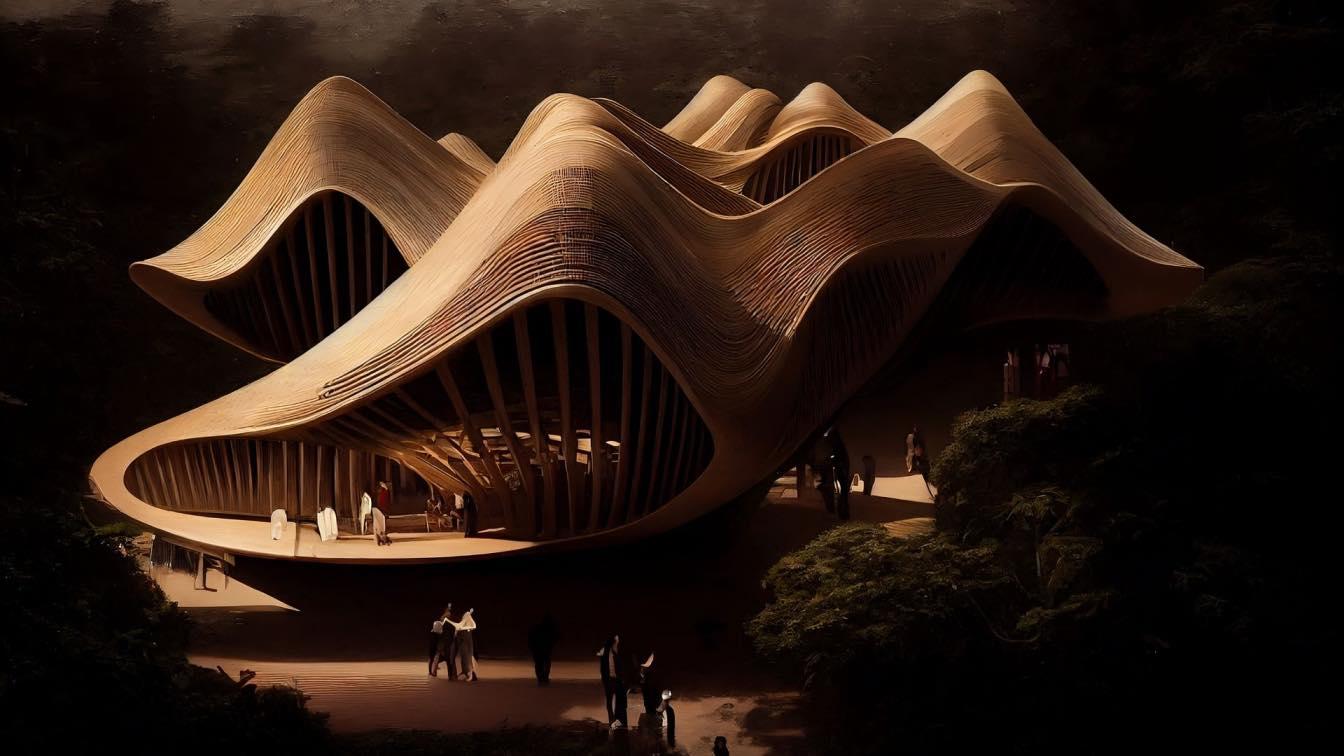
For highly complex and optimized designs, computational design is the key. This involves using algorithms and logic to generate, explore, and refine design options. Software like Rhino with Grasshopper is central to this process.
Why it’s in High Demand:
This skill allows architects to solve problems that are too complex for traditional methods. It enables the creation of:
-
Optimized Forms: Generating thousands of design iterations to find the most structurally sound, materially efficient, or energy-performing option.
-
Complex Geometries: Designing and rationalizing intricate facades, roofs, and structures that can be efficiently fabricated.
-
Mass Customization: Creating unique, variable building components (e.g., custom façade panels) that can be directly sent to digital fabrication machinery.
It represents a shift from drawing every line to programming the rules that generate the design.
D. Unwavering Focus on Resilience and Adaptive Design
Climate change is bringing more frequent and severe weather events. In response, architects must design buildings that are not just sustainable, but resilient. This means creating structures that can withstand, adapt to, and quickly recover from disruptions like floods, hurricanes, wildfires, and heatwaves.
Why it’s in High Demand:
-
Risk Mitigation: Resilient designs protect clients’ financial investments and, more importantly, human lives.
-
Future-Proofing: Buildings are long-term assets. Designing for future climate scenarios ensures they remain safe and functional for decades.
-
Community Role: Architects are increasingly tasked with designing shelters, resilient infrastructure, and buildings that can serve as community hubs during crises.
Key Strategies Include:
-
Elevating Critical Systems: Placing electrical, mechanical, and plumbing equipment above potential flood levels.
-
Specifying Robust Materials: Using impact-resistant glazing, non-combustible cladding, and corrosion-resistant structures.
-
Designing for Passive Survivability: Ensuring buildings can maintain safe temperatures and have access to fresh air and water during extended power outages.
E. Expertise in Human-Centric and Wellness Design
The “WELL Building Standard” has catalyzed a movement towards designing for human health and well-being. Modern architects are now expected to be well-versed in biophilic design, neuroarchitecture, and universal design.
Why it’s in High Demand:
-
Productivity Gains: Employers recognize that spaces with good air quality, natural light, and access to nature boost employee productivity and reduce absenteeism.
-
Health and Wellness Market: There is a booming market for residential and commercial projects that explicitly promote occupant health.
-
Social Equity: Universal design principles ensure buildings are accessible and comfortable for people of all ages and abilities.
This skill involves understanding:
-
Biophilia: The intentional incorporation of natural elements (plants, water, natural materials, views) to reduce stress and improve cognitive function.
-
Circadian Lighting: Designing lighting systems that support the human body’s natural sleep-wake cycle.
-
Acoustic Comfort: Mitigating noise pollution to enhance concentration and privacy.
F. Robust Project and Data Management
Architecture is a business. The most brilliant designer will fail without the ability to manage budgets, schedules, teams, and vast amounts of project data. This includes familiarity with methodologies like Agile Project Management, which emphasizes flexibility and iterative development.
Why it’s in High Demand:
-
Profitability: Firms survive by delivering projects on time and on budget.
-
Client Trust: Clear communication, financial transparency, and meeting deadlines are paramount to building long-term client relationships.
-
Complexity Handling: Modern projects involve enormous data sets from BIM models, performance simulations, and contractor submittals that must be meticulously organized.
Key Competencies:
-
Financial Literacy: Creating and managing project fees, budgets, and forecasts.
-
Scheduling: Proficiency with tools like Microsoft Project or Asana to track milestones and dependencies.
-
Communication: Leading meetings, writing clear reports, and managing stakeholder expectations.
G. Superior Soft Skills: Collaboration, Empathy, and Storytelling
Finally, technology and data must be balanced with intrinsically human skills. The ability to collaborate, empathize with users, and tell a compelling story about a design is what separates a good architect from a great one.
Why they are in High Demand:
-
Interdisciplinary Collaboration: Projects require seamless integration with engineers, contractors, interior designers, and consultants. This demands diplomacy, active listening, and conflict resolution.
-
User-Centered Design: Truly successful spaces come from understanding the deep, often unspoken, needs of the people who will use them. This requires empathy and observational skills.
-
Client Persuasion: Architects must be able to articulate and “sell” their vision, justifying design decisions not just aesthetically, but through data, storytelling, and a clear narrative that connects with the client’s goals.
Synthesizing the Skillset: The Architect as a Master Integrator
The most in-demand modern architect is not necessarily the one who is the best at any single skill, but the one who can best integrate them. They are the master integrator who can:
-
Use BIM (Skill A) to model a design conceived through computational logic (Skill C).
-
Run energy and solar analyses on that model to optimize it for sustainability (Skill B).
-
Ensure the design is resilient to local climate risks (Skill D).
-
Configure the floor plan and sections to maximize occupant well-being through biophilic principles (Skill E).
-
Manage the project budget and timeline to deliver it successfully (Skill F).
-
Collaborate with the entire team and compellingly present the final proposal to the client (Skill G).
This holistic approach is what creates truly innovative, responsible, and valuable architecture.
Conclusion: A Profession in Positive Flux
The demands on architects are greater than ever before. The profession requires a continuous learning mindset and a willingness to embrace new tools and paradigms. However, this expansion of skills represents not a dilution of the architect’s role, but an elevation. By mastering this modern hybrid skillset spanning technology, sustainability, resilience, and human-centricity architects position themselves as indispensable leaders. They become the crucial guides capable of shaping a built environment that is not only beautiful but also intelligent, sustainable, healthy, and resilient for generations to come. The future of architecture belongs to these versatile integrators.