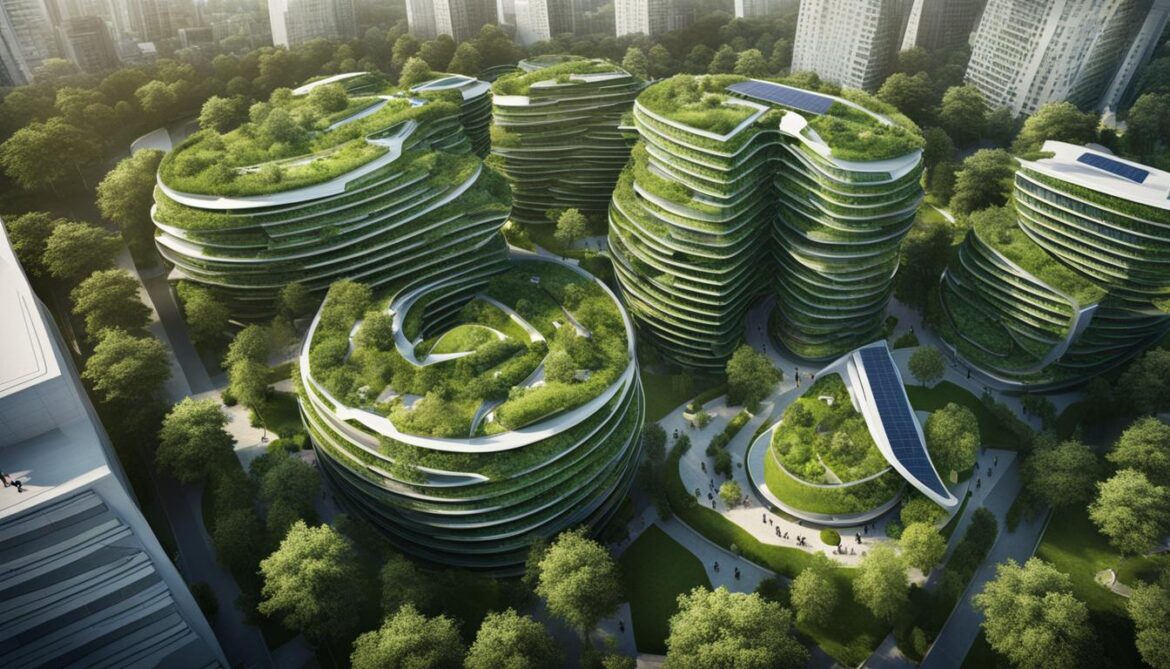
The built environment stands at a pivotal crossroads. For decades, construction has been a primary contributor to global energy consumption, carbon emissions, and resource depletion. However, a profound transformation is underway. Sustainable architecture has evolved from a niche interest into the central guiding principle for the future of global design and construction. It is no longer merely about reducing harm; it is about creating buildings that actively give back to their inhabitants and the planet. This in-depth exploration delves into the most impactful future trends shaping sustainable architecture, moving beyond solar panels and recycled materials to envision a truly regenerative future.
From Green to Regenerative: The Philosophical Shift
Traditional sustainability aims for “less bad” minimizing negative impacts through efficiency and reduced waste. The next frontier, regenerative design, flips this script. It seeks to create structures that have a net-positive impact, improving their local ecosystems and communities.
A. The Core Principle of Regeneration: Regenerative buildings are conceived as living systems integrated within their local biosphere. They don’t just take less from the grid; they generate surplus clean energy. They don’t just use less water; they purify rainwater and manage stormwater to replenish aquifers. They enhance biodiversity, improve air quality, and contribute to the well-being of everyone who interacts with them.
B. Case Study in Action: The Bullitt Center in Seattle, USA, is often called the greenest commercial building in the world. It is designed to be self-sufficient for water and energy for a 250-year lifespan. Its composting toilets treat waste on-site, and its rainwater collection system meets all water needs, effectively functioning like a building that is also a forest.
C. The Role of Living Building Challenge (LBC): Certifications like the LBC are the guiding frameworks for regenerative design. To be certified, a project must prove it has achieved a series of ambitious performance goals over a full year of operation, including net-positive energy, water, and waste. This performance-driven approach is becoming the gold standard for deep green architecture.
Biophilic Design: Reconnecting Humanity with Nature
While incorporating plants is a part of it, biophilic design is a sophisticated science that acknowledges our innate biological connection to the natural world. Integrating natural elements directly into architectural design significantly reduces stress, enhances creativity, and improves cognitive function.
A. Beyond Potted Plants: The Three Pillars of Biophilia:
1. Nature in the Space: This is the most direct implementation, involving the presence of plants, water features, natural breezes, sounds, and aromas. Think of interior green walls, aquariums, and extensive use of natural ventilation.
2. Natural Analogues: This refers to evoking nature through organic forms, patterns, and materials. Using furniture with bone-like structures, carpets with leaf patterns, wall panels that mimic honeycombs, or color palettes drawn from local landscapes all fall under this category.
3. Nature of the Space: This pertains to the spatial configurations that evoke the feelings of being in nature, such as providing expansive views (prospect), creating safe refuges (refuge), and instilling a sense of mystery by suggesting partially obscured information that makes one want to explore further.
B. Health and Productivity Benefits: Studies by leaders like Terrapin Bright Green have quantified the benefits: workers in offices with biophilic design report a 15% higher level of well-being and are 6% more productive. Patients in hospitals with views of nature have been shown to heal faster and require fewer pain medications.
C. Technological Integration: Advanced systems now allow for dynamic, responsive biophilia. Smart glass that transitions from clear to opaque can mimic the dappled light of a forest canopy. HVAC systems can subtly introduce natural scents of rain or forest. Sound masking systems can pipe in nature sounds to cancel out distracting office noise.
The Data-Driven Building: AI, IoT, and Smart Automation
The future sustainable building is a deeply connected, intelligent organism. The Internet of Things (IoT) and Artificial Intelligence (AI) are revolutionizing how buildings manage their own performance in real-time.
A. Optimized Energy Management: Networks of sensors monitor occupancy, temperature, humidity, and light levels across every room. AI algorithms process this data to make micro-adjustments to heating, cooling, and lighting, ensuring energy is only used where and when it is needed. For example, a conference room empty after 6 PM will have its systems powered down automatically.
B. Predictive Maintenance: IoT sensors on critical equipment like pumps, fans, and filters can detect subtle vibrations, temperature changes, or performance dips that indicate imminent failure. This allows facility managers to schedule maintenance before a breakdown occurs, preventing wasteful energy spikes from inefficient equipment and avoiding costly emergency repairs.
C. Integrated Smart Grids: Buildings are no longer passive energy consumers. They become active participants in the energy grid. Smart buildings can communicate with utility providers, automatically selling stored solar energy back to the grid during peak demand hours (when prices are highest) and drawing power during off-peak times, creating a dynamic and efficient energy ecosystem.
Embracing the Circular Economy in Construction
The linear “take-make-waste” model of construction is unsustainable. The circular economy model aims to eliminate waste entirely, viewing every material as a resource for a future loop.
A. Design for Disassembly (DfD): This is a foundational principle. Buildings are designed like Lego sets, with components that can be easily taken apart, repaired, reused, or recycled. This means using mechanical fasteners like bolts and screws instead of irreversible glues and welds. It creates a “building material bank” for the future.
B. Upcycled and Recycled Materials Innovation: The market is exploding with innovative materials that divert waste from landfills. Examples include:
* Mycelium Insulation: Grown from fungal root structures, this material is fire-resistant and fully compostable.
* Bricks from Construction Waste: Companies are creating new bricks by compressing debris from demolition sites.
* Fabric from Plastic Bottles: Recycled PET plastic is spun into durable insulation and carpet fibers.
* Reclaimed Wood and Metal: Using salvaged materials from old buildings adds history and character while drastically reducing the embodied carbon of new construction.
C. The Power of Digital Material Passports: Each building component is tagged with a digital passport (e.g., a QR code) that details its material composition, origin, and instructions for future disassembly and recycling. This creates a transparent and valuable database for future renovators or deconstructors, ensuring materials are properly valued and cycled.
Net-Zero Energy and Water: The New Baseline
The ambition for all new buildings is shifting towards net-zero operational carbon, meaning the total amount of energy used by the building on an annual basis is roughly equal to the amount of renewable energy created on-site.
A. The Triad of Net-Zero Energy:
1. Passive Design First: This is the most cost-effective strategy. It involves optimizing the building’s orientation, shape, insulation, and window placement to leverage natural heating, cooling, and lighting. Techniques like passive solar gain and strategic shading are paramount.
2. Hyper-Efficiency: After minimizing energy needs, the next step is to use the most efficient systems available. This includes LED lighting, high-efficiency HVAC systems (like geothermal heat pumps), and Energy Star appliances.
3. On-Site Renewables: Finally, the remaining reduced energy demand is met by generating power on-site through photovoltaic solar panels, small-scale wind turbines, or other renewable technologies.
B. Achieving Net-Zero Water: This is often a greater challenge. It requires a closed-loop system where all water used is captured, purified, and reused on-site. Strategies include:
* Rainwater harvesting for non-potable uses like toilet flushing and irrigation.
* Greywater systems that recycle water from showers and sinks.
* Blackwater treatment systems that use natural or advanced mechanical processes to treat all wastewater to a potable standard.
Climate-Resilient and Adaptive Design
With the increasing frequency of extreme weather events floods, wildfires, heatwaves, and powerful storms buildings must be designed to withstand and adapt to a changing climate.
A. Flood Resilience: Instead of just trying to keep water out, new designs incorporate “wet-proofing” strategies. This includes using waterproof materials at the ground level, elevating critical mechanical equipment, and creating designated areas that can safely flood without causing structural damage.
B. Wildfire Resistance: In vulnerable zones, architects are specifying non-combustible materials for roofing and siding (like metal, tile, and fiber-cement), creating defensible spaces by clearing vegetation around the structure, and installing ember-resistant vents to prevent burning debris from entering the building.
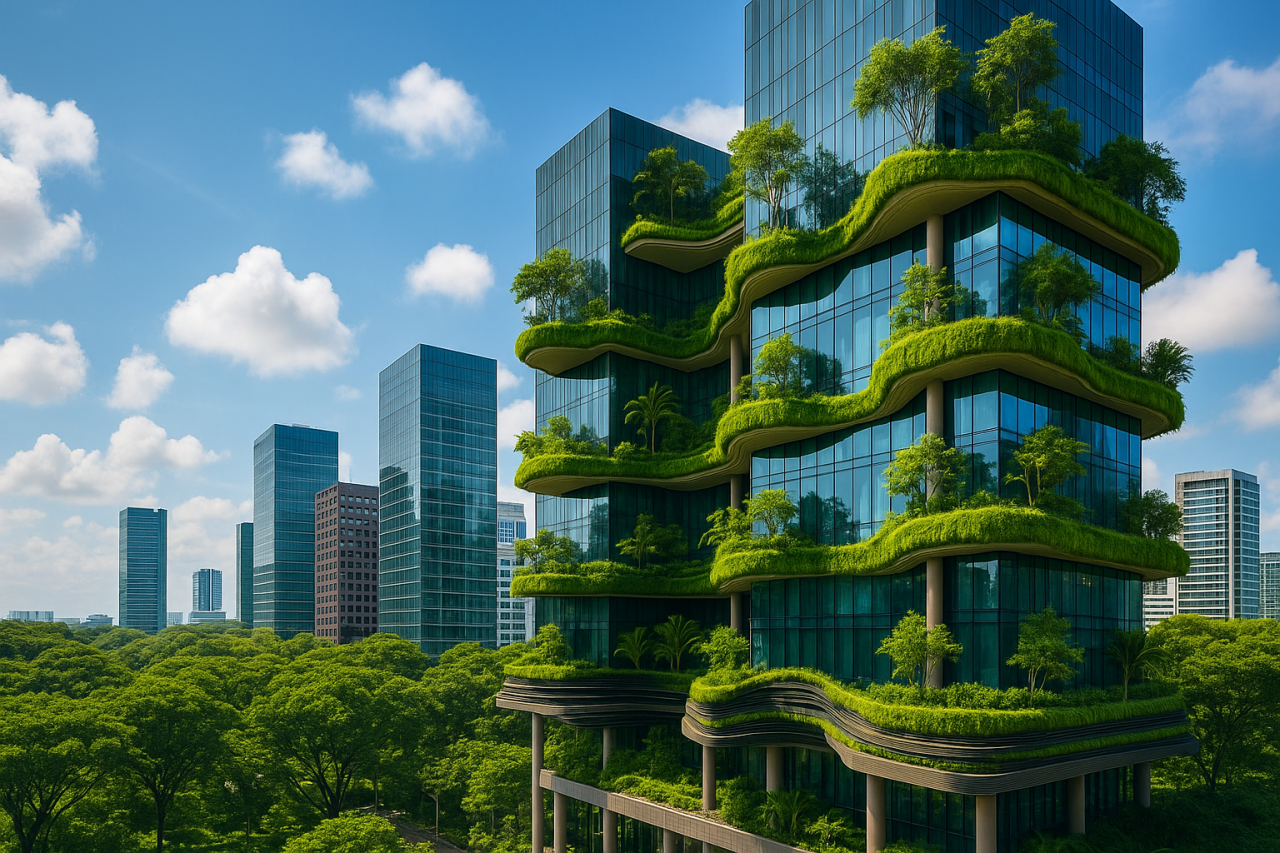
C. Urban Heat Island Mitigation: Cities are often several degrees warmer than surrounding rural areas. Sustainable architecture combats this through reflective “cool” roofs and pavements, increased vegetation (especially green roofs and walls), and designs that promote cooling ventilation corridors throughout urban areas.
Social Sustainability and Community Focus
A truly sustainable building is not just environmentally sound but also socially equitable and culturally connected. It fosters a sense of community and well-being.
A. Promoting Health and Wellness: The WELL Building Standard focuses exclusively on human health. Sustainable architecture incorporates features that promote physical activity (e.g., prominent, inviting staircases), access to healthy food (e.g., space for urban farming), superior air and water quality, and acoustic comfort.
B. Affordable and Inclusive Design: The future of sustainability must be accessible to all, not just a luxury for the wealthy. This involves using cost-effective green technologies, designing for diverse abilities and ages (Universal Design), and ensuring projects benefit the local community by creating public spaces and local jobs.
C. Preserving Cultural Identity: Sustainable architecture should respond to and reflect its local context. This means using local materials, drawing on vernacular design traditions that are inherently climate-responsive (e.g., deep porches in hot climates), and respecting the historical and cultural significance of the site.
Conclusion: A Collective Responsibility for a Sustainable Future
The future trends in sustainable architecture paint a picture of a radically transformed built environment. We are moving from static, energy-intensive structures to dynamic, responsive, and life-enhancing ecosystems. This is not a task for architects alone. It requires a collaborative effort from policymakers, developers, investors, and occupants. Embracing regenerative principles, biophilic connections, circular materials, and intelligent technology is no longer optional; it is an imperative for ensuring the health of our planet and its inhabitants for generations to come. The blueprint for a sustainable future is being drafted today, one innovative, thoughtful building at a time.